The composer behind the concert
Puccini in Lucca: birthplace and boyhood
Where Giacomo Puccini was born and learned his craft in Lucca: the family of church musicians, the birthplace museum and the theatre where he returned.
Reserve a seat for the recital ↗Born in Lucca
Giacomo Puccini was born in Lucca on 22 December 1858. The Puccini Museum describes him as the last of a dynasty of composers who for more than a century held a virtual monopoly of the city's musical life. That sentence explains why an evening of his music in Lucca feels different from the same arias in another city: the town trained him, employed his family and shaped his first sounds. The recital this site guides you to belongs to that story.
A family of church musicians
Wikipedia traces the family to a great-great-grandfather, also named Giacomo, who was maestro di cappella at Lucca's cathedral, a post the Puccini family held from 1740 to 1864. A maestro di cappella directed the music of a church. For Giacomo the opera composer, that meant a household where music was a trade handed down by example, and a city where the church was the main employer of musicians. Puccini took that training into the theatre, where the family's church posts could not follow.
Read next: Puccini's best-known arias for first-timers
The birthplace museum
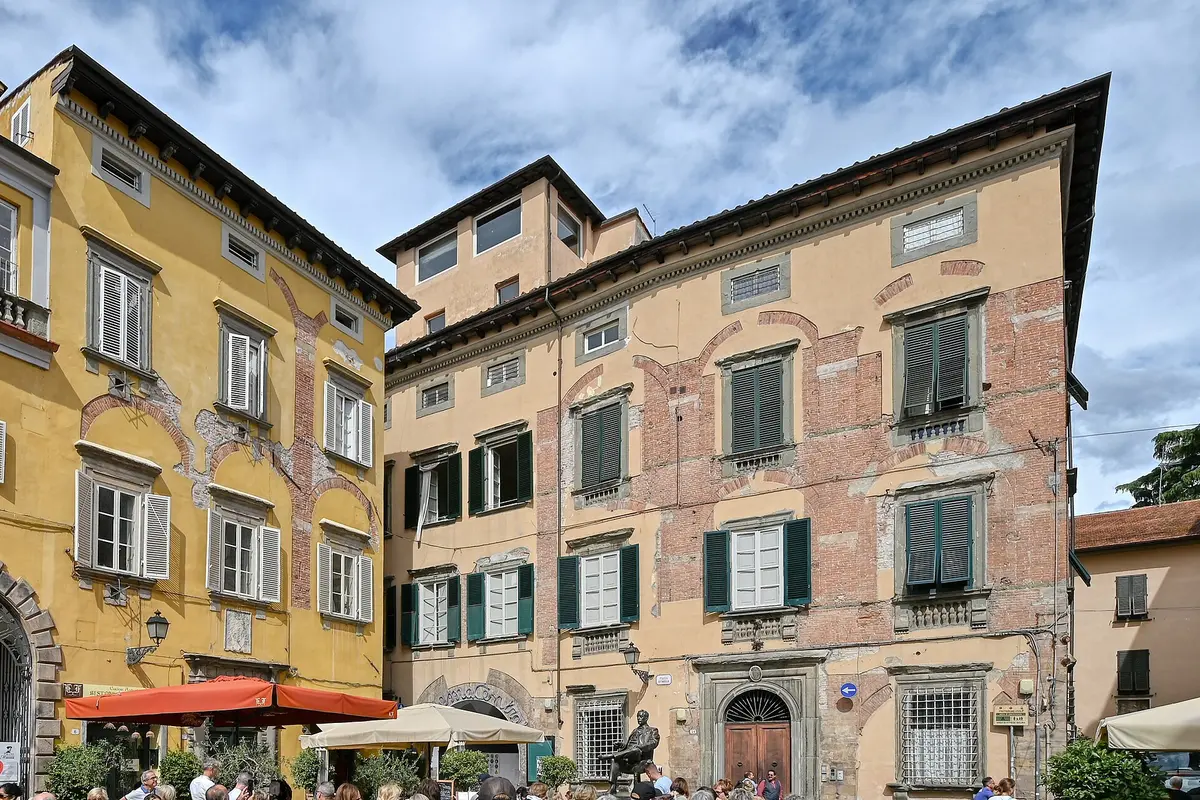
The Puccini Museum, Casa Natale, is at Corte San Lorenzo 9. It was inaugurated in 1979, and in 2010 ownership of the building and most of its furnishings passed to the Fondazione Cassa di Risparmio di Lucca. The rooms were restored to their original layout using an archival document from around 1820, the period when the family first lived there, and the apartment is furnished with pieces and paintings that belonged to the Puccini family. Opening hours change, so check the museum's own site before you go.
A choirboy at the cathedral
According to Wikipedia, Puccini was educated at the San Michele seminary and then at the cathedral seminary, with his uncle Fortunato Magi supervising his musical education. As a boy he sang in the cathedral's boys' choir and later served as a substitute organist there. The cathedral is the Cathedral of San Martino, a short walk from the church where the concerts are held in the warmer months, so the boy's workplace and today's recital room share one neighbourhood.
From the Pacini school to Milan
Wikipedia says Puccini earned a diploma from Lucca's Pacini School of Music in 1880, having studied with Magi and with Carlo Angeloni. He then spent three years at the Milan Conservatory, which was the route from a provincial church tradition to the opera houses of the north. His first opera performances took place in Milan, and his famous scores were premiered in Turin, Rome and Milan, not in Lucca. The city gave him his training and his roots, and the stage took him away.
The Teatro del Giglio
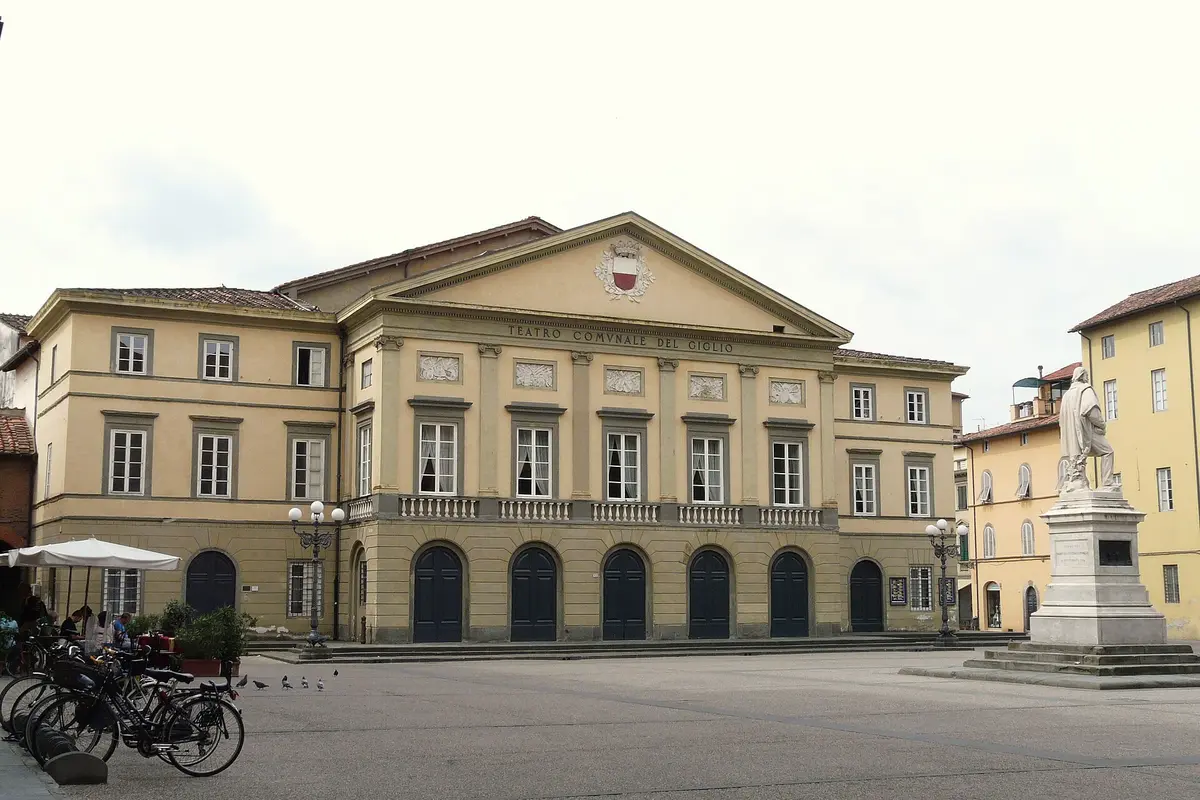
Wikipedia records that a revised version of Puccini's early opera Edgar was revived with success at Lucca's Teatro del Giglio on 5 September 1891. The theatre stands in Piazza del Giglio in the centre of the city and is a neoclassical building dating from 1818. It is the opera house of his hometown, and the festival behind the recital has staged larger galas there. If you want to see where Lucca's opera audience gathers, walk past it after the concert.
The statue in Piazza Cittadella
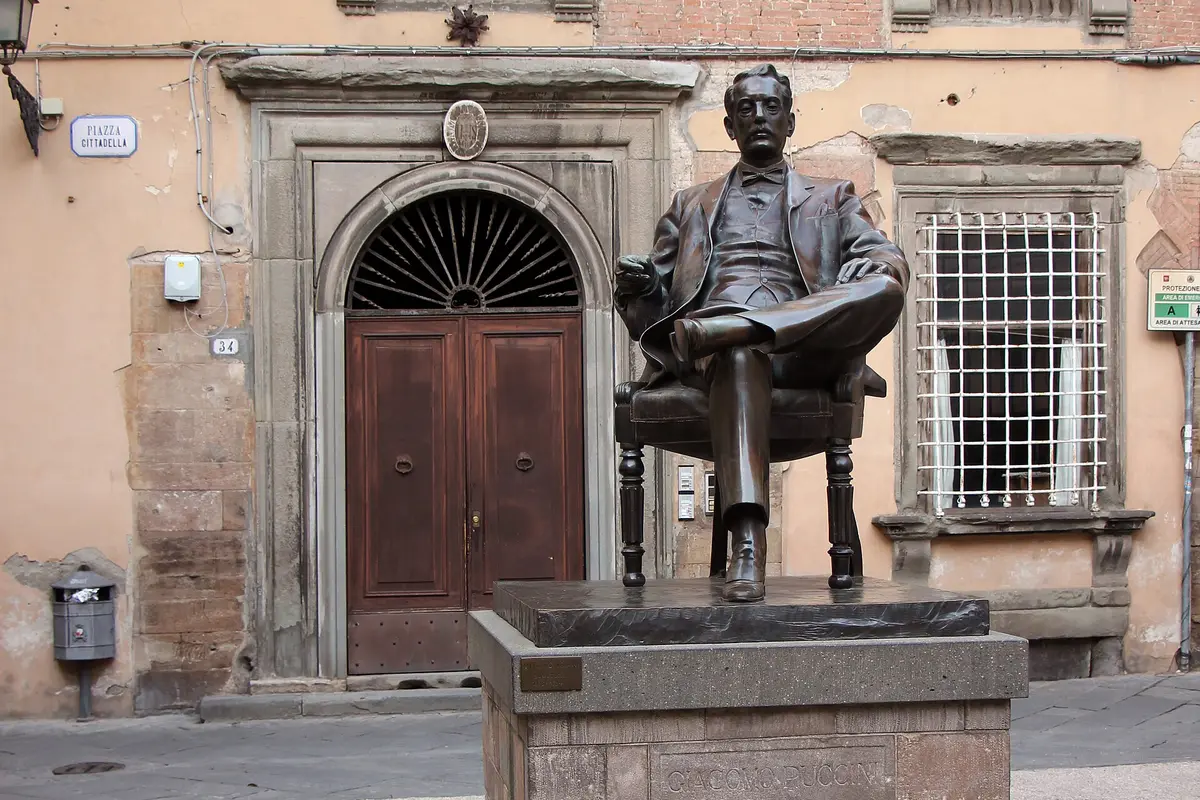
Wikipedia notes that a statue of Puccini stands on Piazza Cittadella in Lucca. It shows the composer seated, in front of an old doorway, and it is a simple Puccini landmark to find on foot. The museum's ticket office and bookshop are at Piazza Cittadella 5, so the square works as a starting point for a short Puccini walk: statue first, then the birthplace on Corte San Lorenzo, then the cathedral square where the evening's music is waiting.
Leaving for the lake
Wikipedia says that from 1891 Puccini spent most of his time at Torre del Lago, a community on the lake near Lucca, where by 1900 he had built a villa. He lived there until 1921, and the villa is now a museum. Torre del Lago also hosts the summer Puccini Festival, which is the usual way to see his operas staged. The Torre del Lago guide on this site explains how that differs from the Lucca recital.
Read next: Torre del Lago: Puccini's villa and festival
Sources